Mastering the Outlands: The Definitive Guide on How to Dominate Apex Legends

Apex Legends revolutionized the battle royale genre upon its surprise release, blending high-octane movement with tactical hero-shooter elements. Unlike traditional shooters where raw aim is the sole arbiter of victory, Apex demands a symphony of spatial awareness, character mastery, and split-second decision-making. As the game has evolved through dozens of seasons, the barrier to entry has risen, leaving many new players struggling to find their footing in the fast-paced environment of Kings Canyon, World’s Edge, and beyond.
To truly excel in the Apex Games, one must look beyond the surface level of "point and shoot." Success is built on a foundation of movement mechanics, inventory management, and team synergy. This guide is designed to take you from a struggling "hardstuck" player to a champion of the Outlands by breaking down the essential "how-to" components of the game. We will explore everything from the initial drop to the final circle, ensuring you have the tactical knowledge to outplay even the most aggressive "Predator" level opponents.
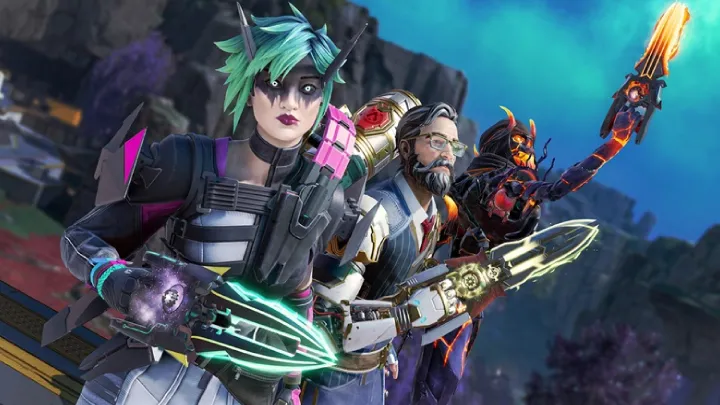
1. How to Choose Your Legend: Finding the Right Role for Your Playstyle
Before you even touch the ground, your success is dictated by your choice of Legend. Apex Legends categorizes its roster into five distinct classes: Assault, Skirmisher, Recon, Controller, and Support. Choosing a Legend isn't just about who looks the coolest; it’s about how their kit complements your natural playstyle. If you are aggressive and enjoy leading the charge, an Assault legend like Mad Maggie or Bangalore provides the offensive pressure needed to break enemy lines. Conversely, if you prefer strategic positioning, a Controller legend like Catalyst or Wattson allows you to dictate the flow of the battle by fortifying buildings.
Mastering a Legend requires deep knowledge of their "Tactical," "Passive," and "Ultimate" abilities. For example, a Wraith player must know not just how to use their portal, but when to use it to save a downed teammate versus using it to scout safely. It is highly recommended to "main" two or three legends across different classes so you can adapt to your teammates' picks. A balanced team—for instance, a Skirmisher for movement, a Support for resets, and a Recon for intel—will almost always outperform a team with overlapping roles.
Understanding Class Perks:
- Assault: Can carry extra ammo per stack and access "Red" weapon bins for high-tier attachments.
- Skirmisher: Can see the contents of incoming Care Packages to identify high-tier loot early.
- Recon: Can use Survey Beacons to reveal enemy positions on the map for a limited time.
- Support: Can craft ally banners at Replicators, even if they have expired.
- Controller: Can use Ring Consoles to find the location of the next safe zone.
2. The Art of the Drop: How to Manage Early-Game Momentum
The first 60 seconds of a match are often the most chaotic. Knowing how to "drop" effectively is a skill in itself. The "Jumpmaster" must balance the need for high-tier loot with the risk of a "Hot Drop." Dropping into a contested area like Fragment or Skyhook provides immediate action, but it often leads to a quick trip back to the lobby if you don't find a weapon immediately. To drop faster, use the "wave" method: dive straight down to build speed (around 145+ km/h) and then level out to glide toward your target.
Once you land, "looting efficiency" is your highest priority. Beginners often spend too much time staring at items on the floor. You should learn to identify weapon silhouettes and attachment colors at a glance. In the early game, any weapon is better than no weapon. Grab a P2020 or a Mozambique and start looking for body armor (Evo Shields). Remember that in the current version of Apex, your shield evolves based on the damage you deal, so engaging in early, calculated skirmishes is actually beneficial for your late-game survivability.
3. Mastering Movement: How to Use the Environment as a Weapon
Movement is what separates Apex Legends from every other battle royale. It is not just a way to travel; it is a defensive and offensive tool. The most basic "must-learn" mechanic is the Slide Jump. By sliding for a brief moment and jumping at the end of the animation, you maintain momentum and become a harder target to hit. Furthermore, mastering "Holstering" (putting your gun away) while running is essential for repositioning quickly. You run significantly faster with your hands empty, and those few extra meters per second can be the difference between making it to cover or dying in the open.
Advanced movement techniques like Wall Bouncing and Mantle Jumping can give you a massive edge in urban combat. A Wall Bounce allows you to redirect your momentum off a vertical surface, often catching enemies by surprise as you leap over their heads. While these techniques require practice in the Firing Range, the goal is to make your movement unpredictable. If you move in a straight line, you are an easy target; if you use zip-lines, slides, and climbs effectively, you become a ghost that is impossible to pin down.
4. Gunplay Fundamentals: How to Control Recoil and Choose Your Loadout
Apex has a diverse armory, and every weapon has a unique recoil pattern. To improve your aim, you must spend time in the Firing Range practicing "Recoil Smoothing"—a mechanic where moving your character laterally while tracking a target negates most of the vertical kick. Regarding loadouts, a "balanced" kit is usually best. This typically consists of one mid-to-long-range weapon (like the R-301, Flatline, or Nemesis) and one close-quarters weapon (like the R-99, Volt, or a Peacekeeper).
Weapon Tier Categorization:
- Close Range (SMGs/Shotguns): Essential for "finishing" fights inside buildings.
- Mid Range (Assault Rifles/LMGs): The bread and butter for poking and breaking shields.
- Long Range (Snipers/Marksman): Great for evolving your Evo Shield from a distance without overcommitting.
Understanding "Hip-fire" is another crucial "how-to" for gunplay. In many shooters, you must aim down sights (ADS) to be accurate. In Apex, many weapons (especially SMGs and Pistols) are incredibly accurate when fired from the hip at close range. This allows you to maintain your full movement speed while shooting, making you much harder to track for the enemy.
5. Tactical Inventory Management: How to Pack Your Backpack
Inventory space is a limited resource, and how you manage it dictates your "sustainability" in long fights. A common mistake is carrying too much ammo and not enough healing items. As a general rule, carry two stacks of ammo for your primary weapon and one or two for your secondary. The rest of your slots should be dedicated to "Health" and "Utility." You should always prioritize Shield Batteries and Med Kits over smaller cells and syringes, as they provide more "Health per Second" during a chaotic fight.
Utility items, specifically Grenades, are often undervalued by new players. An Arc Star can disable an enemy’s movement and vision, while a Thermite Grenade can force an enemy out of cover or block a doorway. If you have a high-tier backpack (Purple or Gold), try to carry at least two grenades. Managing your "Ult Accelerants" is also key, especially if you are playing a Legend with a high-impact ultimate like Gibraltar or Bloodhound.
6. How to Navigate the Mid-Game: Rotations and Positioning
The mid-game is where many squads fall apart due to "Third Partying"—the act of a third team jumping into an ongoing fight. To avoid this, you must learn how to "Rotate" effectively. A rotation is the path you take to get from your current location to the next safe zone. Avoid running through wide-open fields or "choke points" where teams are likely to be gatekeeping. Instead, use the edges of the ring or high-ground paths to stay safe.
Positioning is the "King" of Apex. Holding the "High Ground" gives you a massive advantage: you can see more of the battlefield, and it is much easier for you to hit headshots while the enemy has to aim upward. If you find yourself in a valley, your priority should be to find a building or a cliffside to anchor. Use "Map Rooms" or "Survey Beacons" to predict where the final circles will end, and try to get to those "Power Positions" before other teams arrive.
7. Team Communication: How to Use the Ping System Effectively
Apex Legends changed the industry with its revolutionary "Ping System." You can communicate almost anything—enemy locations, loot requests, where you are going, or even "watching this spot"—without ever opening your microphone. To play at a high level, you must be a "Pro Pinger." If you see an enemy, don't just say "they're over there"; use the "Enemy Spotted" ping directly on their location. This gives your teammates a visual marker and an estimated distance.
Communication also extends to "Focus Fire." In a team fight, the squad that focuses all three players' damage on a single target will almost always win. Use pings to call out which enemy has a "cracked" (broken) shield. Once one enemy is downed, you have a "3v2" advantage, which is the signal to push aggressively. Without communication, your team will often split their damage across three different enemies, allowing the opponents to retreat, heal, and reset the fight.
8. How to Execute a Successful "Reset": Healing and Reviving
Fights in Apex are rarely settled in one go. Often, you will take damage and need to "Reset." Learning how to "Shield Swap" is the most advanced form of resetting. If your shield is broken and there is a death box nearby, you can open the box and grab the shield inside to instantly restore your armor to full. This is much faster than using a Shield Battery and can turn a losing fight into a winning one in a split second.
When a teammate is downed, you must make a "Risk vs. Reward" calculation. Do not blindly attempt to revive them in the middle of a gunfight. Use "Covering Fire" or defensive abilities (like Newcastle’s shield or Bangalore’s smoke) to create a safe window. If the fight is too hot, it is sometimes better to let the teammate "thirst" (die) so you can grab their banner later or craft it at a Replicator. A full team reset is always better than a "trickle" where players die one by one trying to be a hero.
9. Combat Strategy: How to Approach the Final Circle
When the player count drops to the final three or four squads, the game changes. This is the "Endgame," and it is all about patience. The golden rule of the final circle is: Don't be the first team to start the final fight. If three teams are left and you start fighting one, the third team will simply wait for you to finish and then "clean up" the survivors. Instead, try to poke from a distance and wait for the other two squads to commit to each other.
As the ring closes to its smallest size, "Visual Clarity" becomes an issue. Use your Ultimates now. A Caustic gas cloud or a Bangalore rolling thunder can create enough chaos to allow your team to move safely while the enemies are blinded or slowed. Keep your back to the "Ring" so you don't have to worry about being flanked, and focus on holding your small slice of territory until there is only one team left to face.
10. How to Improve Your Mental Game: Reviewing and Adapting
The final step in mastering Apex Legends is the "Review." Every time you die, ask yourself: "Why did I lose that fight?" Was it poor aim, bad positioning, or a lack of communication? Using software to record your gameplay (VOD review) can be eye-opening. You might realize you were standing in the open when you thought you were in cover, or that you had a grenade in your pocket that could have won the fight.
Apex is a game of high "highs" and low "lows." Maintaining a positive mental attitude (Mental) is crucial. "Tilt" will cause you to make reckless decisions and miss shots. If you are on a losing streak, take a break or head to the Firing Range to work on a specific mechanic. The best players in the world aren't those who never die; they are those who learn the most from every death.
Conclusion
Mastering Apex Legends is a continuous journey of learning and adaptation. By understanding how to choose the right Legend, managing your resources, and utilizing the game’s unique movement and communication systems, you move closer to the coveted "Champion" screen. There is no shortcut to success; it requires hours of practice in the Firing Range and even more hours in the field of battle. However, by applying the tactical "how-to" principles outlined in this guide, you will find that the chaos of the Outlands becomes a playground where you are the one in control. Remember: the transition from a "Legend" to a "Champion" is built one slide-jump and one well-placed ping at a time. Good luck, Legend!
Master Apex Legends by choosing a complementary Legend, looting efficiently, mastering movement like slide-jumping, and using the ping system for team coordination.