.webp)
Backpack Hero Tips & Guide: The Complete Beginner to Endgame Inventory Strategy Handbook

Introduction
Backpack Hero is a roguelike deck-building game with a deceptively simple concept: your backpack is your inventory, but how you arrange items inside it can determine whether you survive or lose a run. Instead of simply collecting the strongest equipment, players must carefully organize weapons, armor, consumables, relics, and special items to create effective combinations.
Every run through the dungeon introduces new equipment and increasingly dangerous enemies. Space is limited, so every item you keep has an opportunity cost. A powerful weapon may be useless if you cannot position the items around it correctly, while an ordinary piece of equipment can become extremely strong when combined with the right accessories.
For beginners, the biggest challenge is understanding that inventory management is part of combat strategy. This guide explains how to organize your backpack, build reliable item combinations, manage resources, and prepare for difficult encounters.
1. Organize Your Backpack From the Start
The first thing to learn in Backpack Hero is that backpack space is a strategic resource.
Simply placing items wherever there is room often creates problems later. Some items need to be adjacent to specific objects, while others work only when placed in particular rows or columns.
Basic Organization
Keep related items together whenever possible.
- Weapons near offensive support items.
- Armor near defensive equipment.
- Consumables in accessible spaces.
- Passive items away from valuable effect zones.
Why Layout Matters
A good backpack can turn an average collection of items into a powerful build.
Before picking up another item, check whether you actually have enough space to use it effectively.
2. Learn Item Adjacency Effects
Many items become stronger when placed beside specific objects.
This is one of the most important mechanics to understand because moving an item can sometimes provide a greater benefit than finding a completely new piece of equipment.
Common Placement Ideas
Weapons
Place offensive bonuses close to your main damage sources.
Armor
Keep defensive modifiers near the equipment they improve.
Utility Items
Position them where they can affect as many relevant items as possible.
Experiment With Placement
Don't assume an item is weak simply because its basic statistics look unimpressive.
Try moving it around your backpack and observe how its effects change.
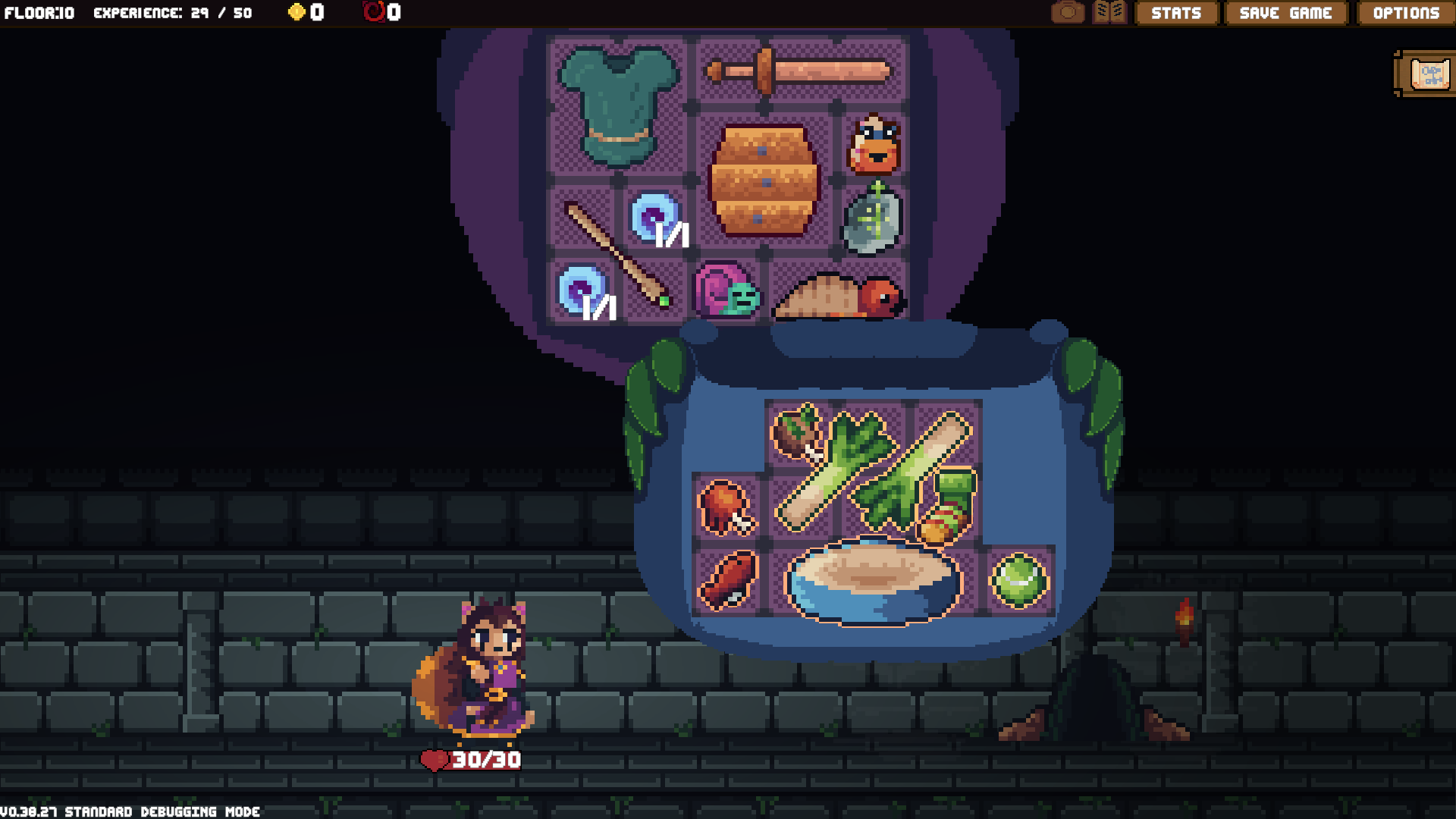
3. Avoid Filling Every Backpack Slot
Having empty space may seem inefficient, but it gives you flexibility.
A completely full backpack can become a major problem when you discover an item that would dramatically improve your build.
Keep Some Space Available
Empty slots allow you to:
- Rearrange equipment.
- Accept valuable rewards.
- Adjust item combinations.
- Prepare for future upgrades.
Common Beginner Mistake
Keeping every low-value item eventually creates clutter.
If an item no longer contributes to your build, selling or removing it is often the better choice.
A smaller, optimized inventory is usually more powerful than a crowded one.
4. Build Around a Core Strategy
A strong run usually develops around one or two major ideas.
Trying to use every powerful item you discover can produce an unfocused build.
Example Build Concepts
- Weapon-focused damage.
- Poison effects.
- Defensive armor.
- Healing and regeneration.
- Critical attacks.
- Status effects.
How to Choose a Strategy
Look at your early rewards and identify repeated effects.
If several items support the same mechanic, consider building around it rather than forcing an unrelated strategy.
The best builds often emerge naturally from the items you discover.
5. Manage Gold Carefully
Gold is extremely valuable because shops allow you to improve your build between encounters.
Many beginners spend their money immediately whenever they see something interesting.
Instead, think about whether a purchase solves an actual weakness.
Good Reasons to Spend Gold
- Upgrade your main weapon.
- Replace a weak defensive item.
- Purchase an important synergy piece.
- Remove unnecessary equipment.
Save When Necessary
Sometimes the best purchase is the one you don't make.
Keeping gold available gives you more options when a particularly valuable item appears later.
6. Prioritize Survival Over Damage
High damage is attractive, but surviving difficult encounters requires defensive planning.
A build that defeats enemies quickly but cannot survive one unlucky attack will eventually fail.
Defensive Options
- Armor.
- Shields.
- Healing.
- Damage reduction.
- Evasion.
- Status control.
Find Your Balance
Your build doesn't need to become completely defensive.
Instead, make sure you have enough protection to survive long enough for your main offensive strategy to work.
7. Learn Enemy Patterns
Each enemy presents different threats.
Some opponents deal heavy direct damage, while others apply status effects or become dangerous if ignored.
Before Attacking
Ask:
- Which enemy can deal the most damage?
- Is someone applying a dangerous status effect?
- Can an enemy become stronger?
- Which opponent can be eliminated quickly?
Target Priority
Generally, remove enemies that create the greatest immediate threat.
Don't always attack the enemy with the lowest health if another opponent is capable of dealing much more damage.
Understanding enemy behavior allows you to make better decisions even with an imperfect build.

8. Use Shops and Events Strategically
Not every room needs to be approached with the same objective.
Some encounters provide combat, while others offer opportunities to improve your backpack or gain resources.
Event Strategy
Think about your current condition before taking risks.
If you're low on health, a dangerous event may not be worth the potential reward.
If your build is already strong, you can afford to take more risks.
Shop Strategy
Prioritize items that improve your existing strategy rather than collecting completely unrelated equipment.
Consistency is more valuable than variety.
9. Prepare for Boss Battles
Boss encounters test the entire structure of your backpack.
A build that handles ordinary enemies easily can still fail against a boss because of high health, special abilities, or unusual attack patterns.
Before a Boss
- Remove unnecessary items.
- Organize your backpack.
- Upgrade important equipment.
- Keep healing available.
- Check your defensive capabilities.
During the Fight
Don't rush your decisions.
Consider what the boss will do on its next turn and determine whether you should attack, defend, heal, or prepare a combination.
Good planning becomes especially important during long battles.
10. Optimize Your Backpack for Endgame
At higher difficulties, backpack organization becomes more important than simply collecting powerful equipment.
Every square of space should contribute to your overall strategy.
Endgame Priorities
- Maximize item synergy.
- Remove weak equipment.
- Maintain efficient positioning.
- Upgrade core items.
- Prepare for elite encounters.
Advanced Tips
Create Dedicated Zones
Reserve parts of the backpack for weapons, defense, and utility.
Protect Your Core Items
Avoid layouts where one movement can disrupt several important effects.
Don't Chase Every Upgrade
A new item is only valuable if it improves your overall build.
Adapt When Necessary
If your current strategy stops working, don't be afraid to reorganize the entire backpack.
Flexibility is one of the most important skills at higher difficulty levels.
Conclusion
Backpack Hero turns inventory management into the heart of its combat system. Success isn't simply about finding powerful equipment; it's about understanding how each item interacts with the others and using limited backpack space as efficiently as possible.
By organizing your inventory carefully, learning adjacency effects, keeping some space available, building around a clear strategy, managing gold, balancing offense with defense, and studying enemy behavior, you'll create much more consistent runs. As you become more experienced, you'll begin looking at every item not as an isolated piece of equipment but as part of a larger system.
The most important lesson is to think before you pick up or move an item. A well-organized backpack can transform an ordinary collection of equipment into a powerful machine capable of surviving the game's toughest encounters.
Description (160 characters):
Complete Backpack Hero guide covering inventory organization, item synergy, backpack layouts, combat, gold management, boss fights, and endgame strategies.